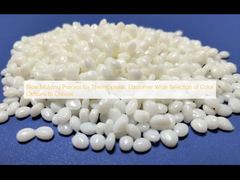
Brief: See the journey from feature description to real application in this concise overview. Discover how Thermoplastic Elastomer (TPEE) delivers rubber-like elasticity while offering versatile processing options like injection molding and blow molding. Watch as we demonstrate its weather resistance, eco-friendly properties, and customizable surface finishes for industrial applications.
Related Product Features:
TPEE material offers high elasticity and flexibility comparable to rubber.
It can be processed using injection molding, extrusion, and blow molding methods.
The material is eco-friendly with a low carbon footprint.
Products can be produced with either smooth or textured surface finishes.
It withstands extreme weather conditions including UV exposure.
Available in a wide range of colors for design flexibility.
Suitable for applications requiring resilience like seals, gaskets, and grips.
Versatile for automotive, electronics, and healthcare industries.
Interrogazioni:
What processing methods are available for TPEE material?
TPEE material can be processed using injection molding, extrusion, and blow molding methods, providing flexibility for manufacturing complex shapes and designs.
How does TPEE material compare to traditional rubber?
TPEE offers similar high elasticity and flexibility to rubber while being more eco-friendly with a lower carbon footprint and recyclable properties.
What customization options are available for TPEE products?
TPEE products can be customized with various surface finishes (smooth or textured), a wide range of colors, and specific processing methods to meet application requirements.
Is TPEE material suitable for outdoor applications?
Yes, TPEE material has excellent weather resistance and can withstand extreme conditions including prolonged UV exposure without degradation.